Imagine a world where artificial intelligence is responsible for not just answering questions or generating images, but also driving trucks, underwriting loans, and even diagnosing illnesses. Now imagine what happens when that AI makes a mistake. Who’s liable? How do you quantify the risk? This is where the next major market opportunity emerges: AI insurance.
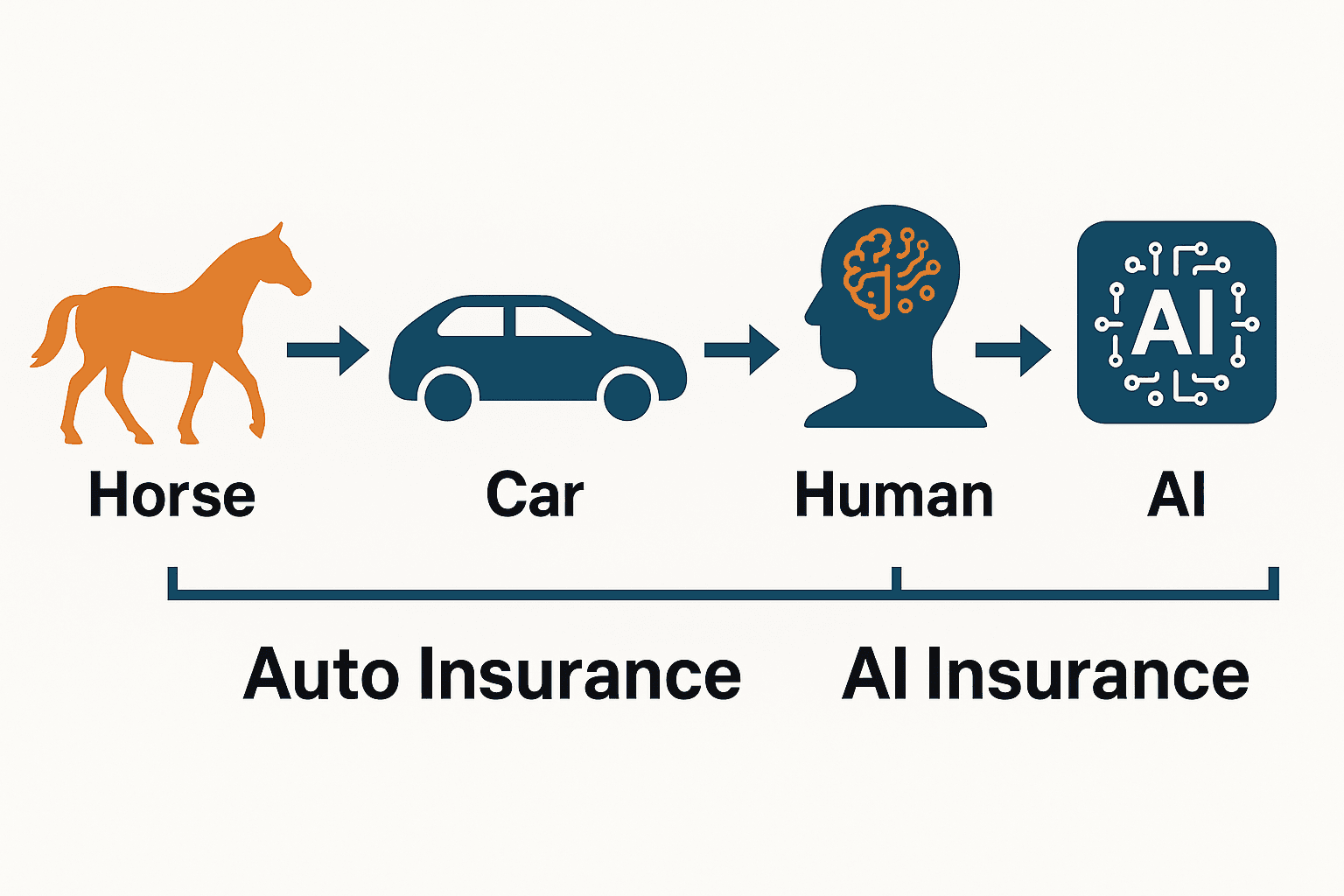
Just as the invention of the automobile gave rise to auto insurance, driver’s licenses, DMV regulations, roadside assistance services, hotels, and travel related services, AI is creating an entirely new ecosystem of risk and opportunity.
History Repeats, with a Twist
In the early 1900s, no one thought about “car insurance” because cars were rare and slow. But as they became mainstream, collisions, injuries, and thefts surged. This led to insurance markets evolving around vehicles, drivers, and liability. Fast-forward to today: AI is the new automobile. But this time, it’s not just transporting people, it’s transporting decisions, recommendations, and automation across healthcare, finance, logistics, and beyond.
Why AI Insurance Is Becoming Necessary
Here are just a few reasons why the AI insurance market is heating up:
- Algorithmic risk: AI models can make biased, inaccurate, or unsafe decisions, especially when operating in unpredictable real-world environments. This can impact medical billing workflows and patient access.
- Opaque models: Many AI systems operate like black boxes, making it difficult to determine what went wrong and who’s responsible.
- Data privacy: AI depends on data. If that data is leaked, misused, or improperly trained, companies may face lawsuits or regulatory fines.
- Regulatory pressure: Governments around the world (think EU’s AI Act, U.S. AI Bill of Rights) are developing stricter frameworks. Insurers will play a role in ensuring compliance.
In short, AI insurance isn’t optional, it’s inevitable.
What AI Insurance Will Look Like
So what does AI insurance cover? Here’s a preview of the types of policies we’re starting to see (and can expect more of soon):
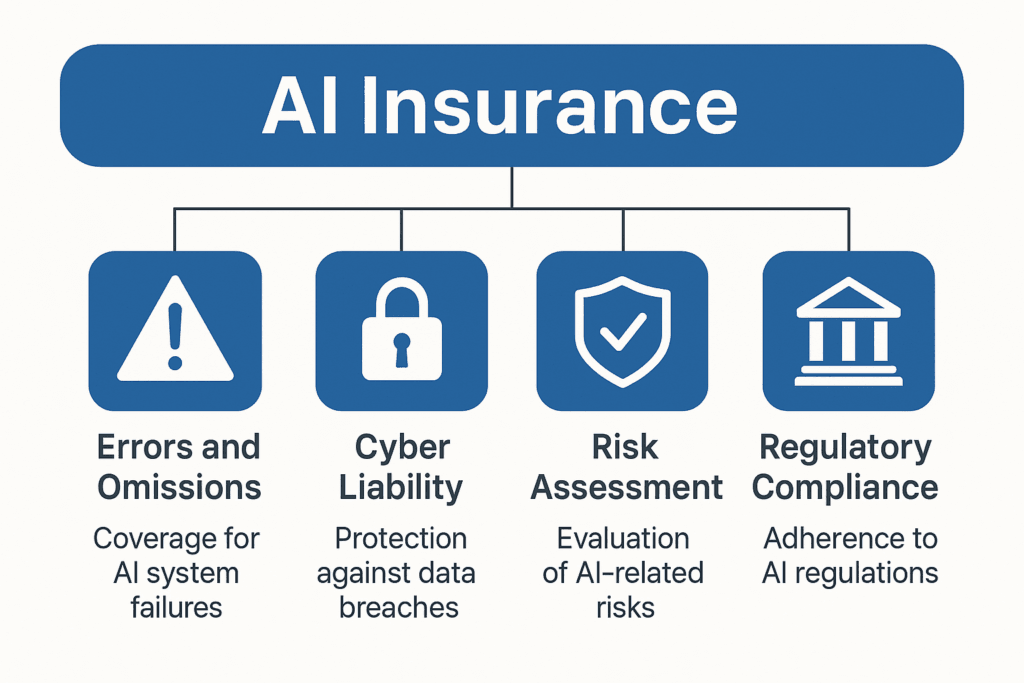
- Model Performance Guarantees: Protection against poor or failed predictions in mission-critical systems (think healthcare diagnostics or autonomous vehicles).
- Algorithmic Liability: Coverage for damages caused by AI decision-making (e.g., wrongful loan denials, HR screening bias, surgical robot errors).
- Cyber & Data Breach: Enhanced versions of existing cyber insurance, tailored to AI data pipelines and training datasets.
- Regulatory Risk Insurance: Covering fines or penalties from AI non-compliance in heavily regulated industries.
- Synthetic Media Protection: Insurance for businesses creating or distributing AI-generated content (e.g., deepfake risks, copyright conflicts).
These policies will need to be underwritten with a whole new playbook. One that understands training data, model drift, explainability, and software dependencies.

Who’s Jumping In?
Major insurers like Munich Re, AXA, and Lloyd’s of London are already piloting AI liability products (Munich Re, n.d.; AXA XL, 2024; Lloyd’s of London, 2024). Startups are emerging to specialize in algorithm risk assessment. Meanwhile, consulting firms and legal tech companies are building services to help companies “audit their AI” for insurability.
This creates a ripple effect:
- New professions: AI risk analysts, model auditors, AI claim investigators.
- New tools: Software to monitor real-time AI behavior for policy compliance.
- New partnerships: Between tech companies and insurers to co-develop safety frameworks.
The Bottom Line
AI insurance is not just a byproduct of innovation, it’s the foundation for trust and scalability. As more companies integrate AI into operations, having robust insurance isn’t just a safety net, it’s a competitive edge.
The market for AI-related insurance products is still in its infancy, but it has all the ingredients to become a multi-billion dollar sector by the end of the decade.
Want more content like this?
Sign up for our newsletter and get insights on healthcare IT, automation, and AI trends, delivered straight to your inbox.
Have thoughts or questions? Feel free to leave a comment below. We’d love to hear your perspective.
References
AXA XL. (2024, April 3). AXA XL unveils new cyber insurance extending coverage to help businesses manage emerging Gen AI risks. https://axaxl.com/press-releases/axa-xl-unveils-new-cyber-insurance-extending-coverage-to-help-businesses-manage-emerging-gen-ai-risks
Lloyd’s of London. (2024, February 29). AI liability insurance: Lloyd’s launches coverage for chatbot errors. AI Today. https://aitoday.com/generative-ai/ai-liability-insurance-lloyds-launches-coverage-for-chatbot-errors
Munich Re. (n.d.). Insure AI: Tailor-made insurance for artificial intelligence. https://www.munichre.com/en/solutions/for-industry-clients/insure-ai.html