What They Are, How They Work, and Why They Matter
If you’ve ever wondered “What is an API?” you’re not alone. APIs are everywhere in modern technology, powering apps, websites, and the tools you use every day, including in healthcare. This guide is an API for beginners, no tech jargon, just simple explanations with real-world examples.
What is an API?
API stands for Application Programming Interface. Think of it as a digital translator. When two different pieces of software need to talk, the API provides the rules and language so they can understand each other.
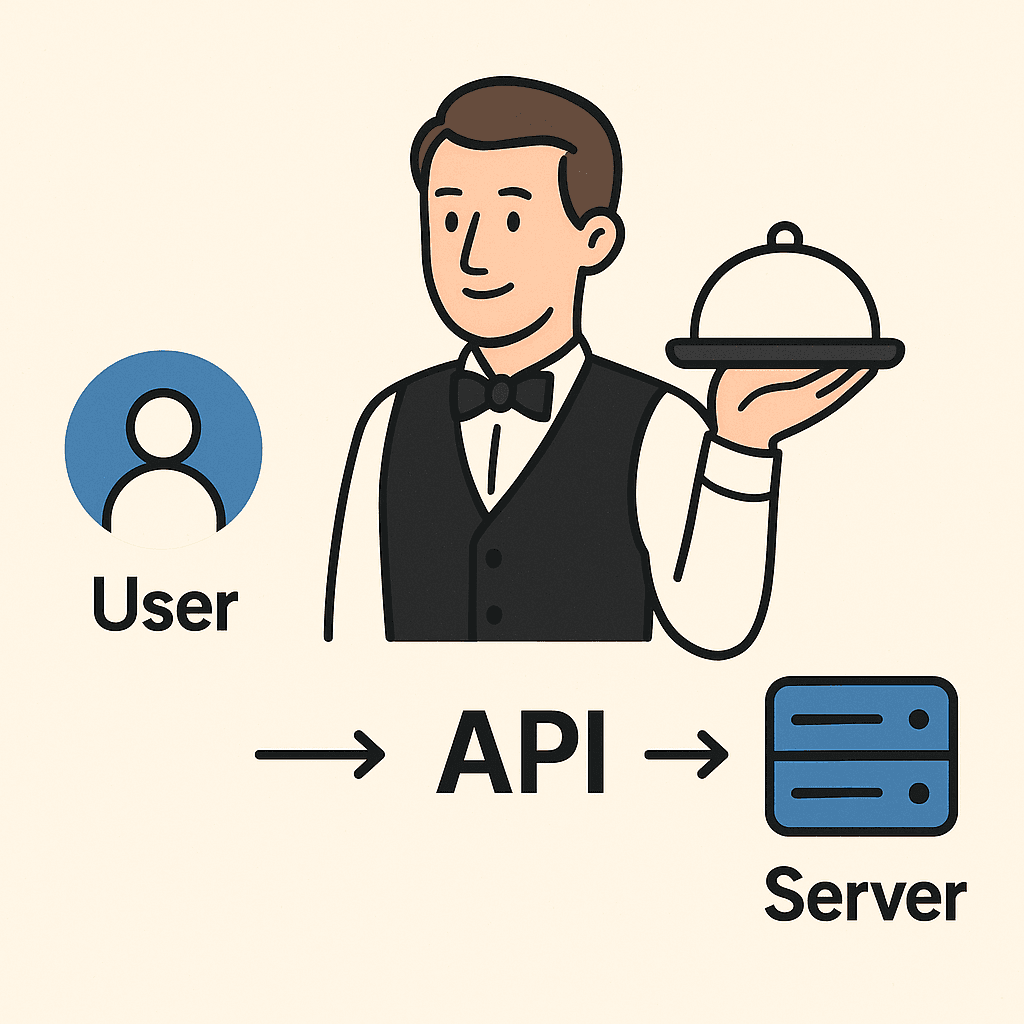
A popular analogy: an API is like a waiter at a restaurant. You (the user) tell the waiter what you want, the waiter delivers your order to the kitchen (the system), and then brings back the meal (the result).
How do APIs work?
At its core, an API is a set of requests and responses. Here are a few everyday API examples:
- Login with Google or Facebook → The website calls Google’s API to confirm your account.
- Weather apps → They fetch real-time data from a weather API instead of storing forecasts themselves.
- Online payments → When you check out with PayPal, APIs securely connect the shopping site to PayPal’s system.
- Healthcare modules → linking clinical modules to prescription management systems when they are separate programs, but integrated.
APIs usually share data in formats like JSON or XML. Think of these as neatly packaged text that computers can read quickly.
Why are APIs important?
Without APIs, developers would have to rebuild the same features over and over. Instead, APIs let you “plug in” existing services. That means:
- Faster development — Skip reinventing the wheel.
- Better reliability — Use tested, secure services.
- More innovation — Combine APIs to create something new.
For example, a delivery app might use Google Maps API for directions, Stripe API for payments, and Twilio API for sending text notifications, all without writing those systems from scratch.
What can you do with APIs?
If you’re just starting out, here are a few beginner-friendly use cases that show what you can do with APIs:
- Automate tasks like unsubscribing from spam emails or moving files between apps.
- Connect everyday tools such as spreadsheets, CRMs, and cloud storage.
- Build apps that use AI APIs (like ChatGPT), maps, or payment systems.
- Integrating programs to eliminate double data entry when the same data needs to be in both systems.
How to learn APIs as a beginner
The best way to understand APIs is hands-on practice. Start with small projects:
- Read API documentation — Public APIs like OpenWeatherMap are great for beginners.
- Try API requests — Free tools like Postman help you see how requests and responses work.
- Experiment in code — Languages like Python or JavaScript make it easy to connect APIs and use the results in real projects.
Final thoughts
APIs are the connectors of the digital world. They let apps and systems share data, save developers time, and open the door to new ideas. Whether you’re looking to automate your workflow, build your first app, or dive into AI projects, learning APIs is the first step.