How They Work, Why They Matter, and What I Learned
In a recent post, we explored what an API (Application Programming Interface) is and how it connects different systems, much like a waiter carrying messages between a customer and the kitchen. That’s the starting point for understanding APIs beyond the basics, but once you go a bit deeper, APIs reveal a much broader story about how modern technology actually works.
APIs aren’t just connectors. They’re the building blocks of digital systems, the reason we can integrate, automate, and innovate without rebuilding the same processes over and over. After spending time learning more about them, here’s what stood out to me.
APIs: The power of abstraction
One of the most important things I learned is that APIs abstract away complexity. In simple terms, that means you don’t need to know how the underlying system works to use it, you just need to know what it does.
Think about driving a car. You don’t need to understand how the engine operates; you just turn the key and drive. APIs work the same way. They provide a ready-made interface that lets you “drive” technology without rebuilding it from scratch.
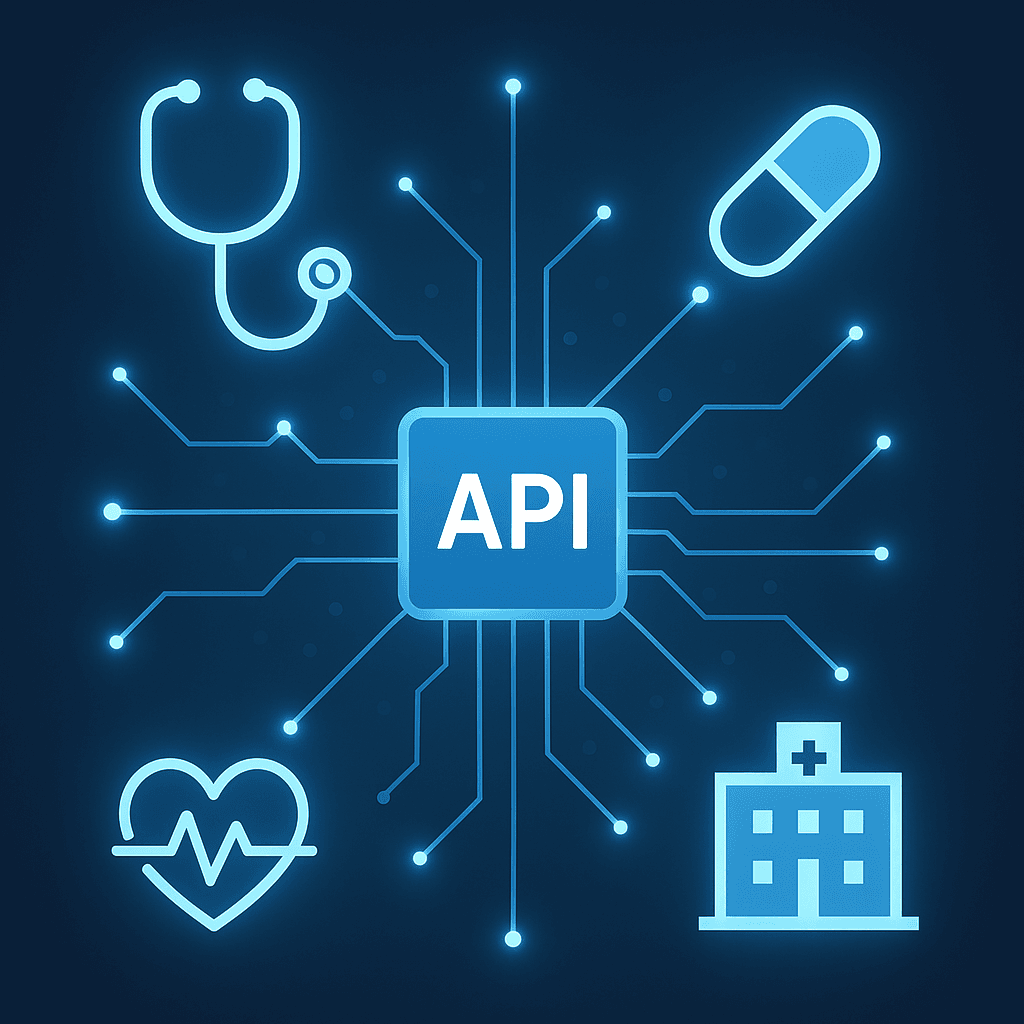
In healthcare IT, this abstraction is critical. Systems like EHRs, billing software, and pharmacy applications often run on entirely different platforms. APIs bridge those gaps, allowing information to move safely and consistently, no matter how each system is built.
REST and JSON. The language of modern APIs
Most APIs today are built on a framework called REST, short for Representational State Transfer. Without getting too technical, REST follows simple internet rules that make communication predictable and efficient. Common REST commands include:
- GET – retrieve data
- POST – send new data
- PUT – update existing data
- DELETE – remove data
These requests and responses are usually sent in JSON format, which stands for JavaScript Object Notation. JSON is a clean, lightweight way to represent information, easy for humans to read and even easier for computers to process. It’s what allows systems across industries to share data quickly and accurately.
APIs as digital building blocks
Every API is like a Lego piece in the digital world. You can combine them to build new capabilities without reinventing what already exists. For example, a healthcare organization could:
- Use one API to verify insurance eligibility.
- Use another to retrieve lab results.
- Use a third to send refill notifications to patients.
Each block connects seamlessly with the others, and because the APIs already exist, developers and analysts can focus on what they want to achieve instead of how to build it from the ground up. This modular approach speeds up innovation and allows even smaller teams to deliver enterprise-level solutions.
Why this matters for healthcare IT
Healthcare systems are famous for fragmentation. APIs help solve that problem by providing standardized, secure connections between systems that were never designed to work together. The results are measurable:
- Reduced manual entry — fewer opportunities for error.
- Improved interoperability — faster, more reliable data exchange.
- Scalable innovation — organizations can add or replace systems without starting over.
In short, APIs make it possible for healthcare technology to behave like one connected ecosystem rather than a collection of isolated tools.
Taking it further
If you read my first post, API for Beginners, you already understand the foundation. This next layer for understanding APIs beyond the basics is about seeing APIs not just as connectors, but as strategic enablers. Tools that let businesses innovate faster, adapt to change, and streamline how information flows. The more I learn about APIs, the more I realize they’re not just a technical concept, they’re an operational philosophy. They’re how the digital world collaborates.